How do U.S. universities become the core engine for cultivating innovative talent?
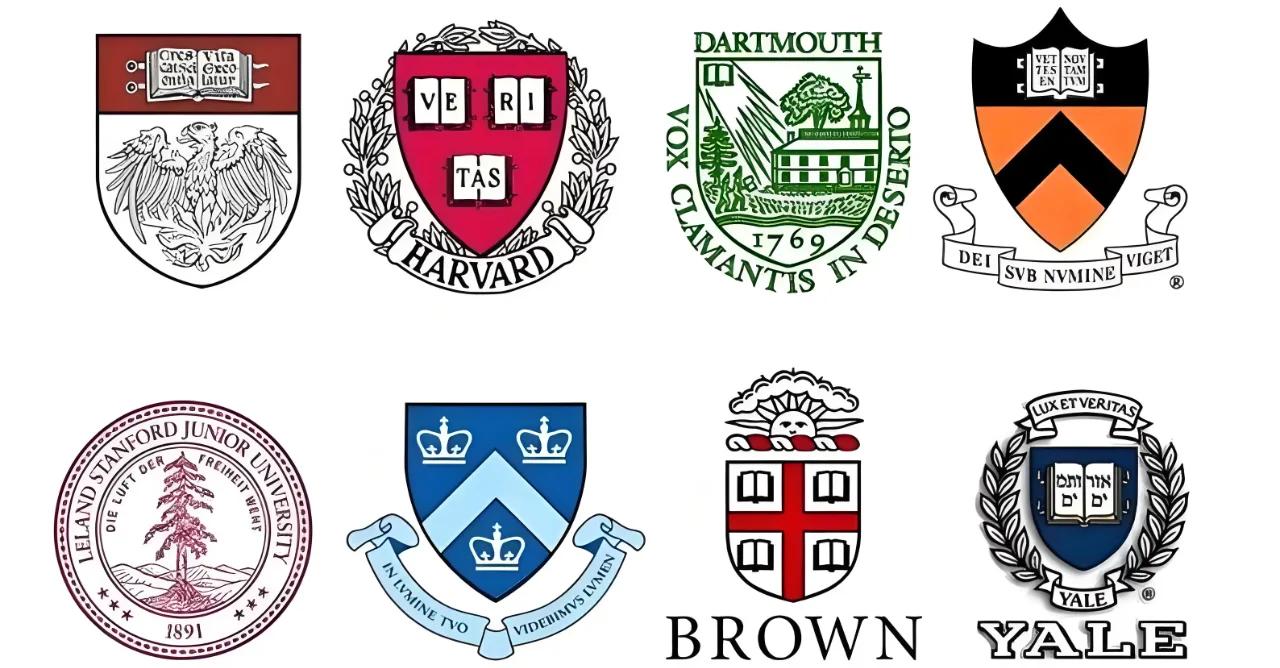
After World War II, the United States elevated technological competition to a national strategy. The federal government consistently invested in defense and basic research at universities, driving innovation at Stanford, Harvard, and others.MITA research university that attracts top talent.1980 In 1980, the Bayh-Dole Act granted universities intellectual property and commercialization rights to federally funded research results, effectively bridging the gap between labs and industry. At the same time, tech clusters emerged in Silicon Valley and near Boston, fueled by active venture capital. With enterprise needs deeply aligned with university research, institutions evolved from purely teaching-focused organizations into innovation hubs and talent incubators—becoming a core driver of U.S. leadership in semiconductors, the internet, biomedicine, and artificial intelligence.
I. Five Core Mechanisms Underpinning Innovation Talent Development at Top U.S. Universities
(I) Build a Cross-Disciplinary Knowledge Base: General Foundations and Specialized Expertise
US universities, exemplified by the Ivy League, are built on a core curriculum that requires undergraduates to complete cross-disciplinary courses in literature, arts, history, ethics, social analysis, and quantitative reasoning before specializing. For instance, Stanford University promotes a balanced approach emphasizing both breadth and depth, with general education covering humanities, social sciences, and natural sciences. 9 Broad disciplines emphasize integrating scientific rigor with humanistic literacy, avoiding the cognitive limitations of siloed fields. This approach equips students with both specialized depth and cross-disciplinary perspectives, providing a knowledge foundation for disruptive innovation.
(2) Research贯穿全程: Let students learn through research
Top U.S. universities commonly require undergraduates in lower-level courses to join research labs, with research tied to degree requirements. Stanford has established... “Undergraduate Research Honors Degree”, require students to complete over two years of original research and produce tangible outcomes; Harvard,MITEncourage early-year students to join the professor's research group and engage directly in cutting-edge projects. The mentorship model is built on equal collaboration, open inquiry, and constructive questioning. Students and mentors work together to tackle challenges, embrace experimentation, and learn from mistakes—transforming core research skills like problem identification, solution design, and execution into second nature.
(3) Interdisciplinary Integration to Break Through Single-Discipline Innovation Bottlenecks
Universities are increasingly breaking down disciplinary silos by launching interdisciplinary programs, joint degrees, and cross-disciplinary research centers. For instance, Stanford's School of Engineering and School of Business co-offer courses such as "New Venture Creation" and "Startup Garage," requiring students from engineering, business, and design to form teams and execute real-world startup projects. Harvard has similarly fostered collaboration among its Law School, Business School, and Kennedy School of Public Policy to cultivate talent capable of delivering comprehensive solutions to complex societal challenges. These mechanisms directly give rise toAI +Healthcare, Climate + Engineering, Computing
+ Cross-sector innovation directions in society.
(IV) Deep Collaboration Among Industry, Academia, and Research: Extending the Classroom to Industry and Markets
Universities generally support students taking a leave of absence to start businesses, retain their enrollment status, and return to complete their studies, providing institutional flexibility for entrepreneurship. Additionally, they collaborate with enterprises to co-establish laboratories, commission research projects, and offer paid internships.Cooperative), enabling students to complete technology-to-product transformation training in real-world scenarios. Stanford pioneered the university research park model. + Technology Licensing Office (OTL) Model: Connects campus land and research outcomes with enterprises, prioritizes hiring graduates from the university, and creates a talent loop.
(5) Systematize entrepreneurship education to cultivate technology startup leaders
Stanford Technology Ventures Program (STVPUniversities are building a full-chain support system for entrepreneurship, including tiered courses, mentorship, incubation spaces, and financing connections. The curriculum emphasizes hands-on practice: students develop product prototypes, conduct market validation, and pitch for funding. Mentors are successful Silicon Valley entrepreneurs and investors. Incubators work in tandem with venture capital firms to accelerate project commercialization. This model has produced numerous innovation leaders capable of transforming lab technologies into world-class companies.
II. U.S. Top Universities Hold Unique Advantages Compared to Other Countries
(1) Training Positioning: From “Knowledge Recipient”
To “Original Creator”
Institutions in most countries prioritize technical skills, standardized training, and career readiness, emphasizing knowledge delivery and structured practice. Top U.S. universities aim to cultivate discoverers, inventors, and entrepreneurs—placing critical thinking, originality, and cross-disciplinary integration at the forefront—and excel in drawing 0 To 1 breakthroughs.
(II) Research and Teaching Relationship: Research as Teaching, Immersive Training Throughout
In most countries, undergraduate teaching and research are separated: undergraduates focus on coursework, while research is concentrated at the graduate level. In U.S. universities, research spans from undergraduate studies through doctoral programs. Learning is driven by research projects; students master methodologies by tackling challenges and develop a strong foundation in inquiry.
Inquiry-based learning.
(3) Industry-Academia-Research Collaboration: Market-driven and deeply symbiotic, not project-based cooperation
In most countries, university-industry collaborations are limited to short-term projects, commissioned development, or technology transfers, resulting in loose coordination. In contrast, the U.S., grounded in the Bayh-Dole Act, has established a symbiotic ecosystem where universities provide technology, companies offer application scenarios, and capital drives momentum. This model enables two-way flow of talent, technology, and funding, achieving global leadership in conversion efficiency.
(4) Institutional Flexibility: Highly adaptable to support innovation and growth
U.S. universities offer high flexibility in academic calendars, course selection, major changes, leave of absence for entrepreneurship, and cross-institutional collaboration, prioritizing individuality and interests. In contrast, many other countries enforce rigid systems with fixed durations, strict major boundaries, and inflexible management, hindering the growth of unconventional innovators.
(V) Ecosystem Loop: Global Talent — World-Class Research — Industry Implementation — Capital Return
U.S. universities leverage global talent attraction, federal research funding, and Silicon Valley... / Boston's industrial cluster and venture capital ecosystem attract global talent. — Original Research — Monetize Your Startup — A closed loop that feeds back into universities; other countries often lack a complete ecosystem, making it difficult to sustainably produce top-tier innovative talent in large volumes.
Over the past five decades, universities like Stanford and Harvard have consistently produced Nobel laureates and Turing Award winners, incubating companies such as Hewlett-Packard, Cisco, Google,OpenAIEquipped to transform the world, these institutions have become a talent reservoir for U.S. tech dominance. Their model proves that innovation talent isn't taught—it's cultivated through liberal arts foundations, rigorous research training, cross-disciplinary collaboration, and real-world industry experience. Top U.S. universities set the global benchmark for innovation talent development by leveraging five pillars: liberal education, research-driven learning, interdisciplinary integration, a closed-loop ecosystem of academia-industry-government collaboration, and institutional inclusivity. This approach offers a blueprint for nations building innovative economies: universities must evolve from teaching centers into hubs of innovation ecosystems, aligning policies, culture, and resources to unleash original human potential.